

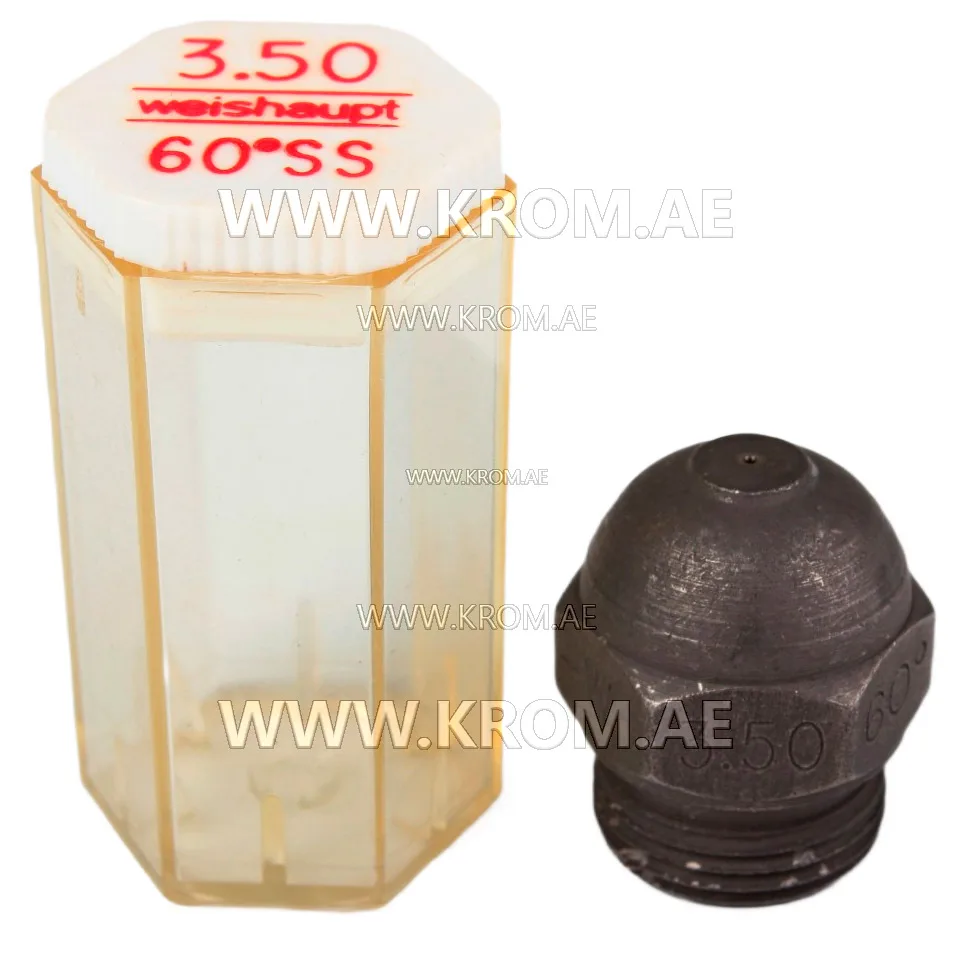
Weishaupt Nozzle Hago 3.50GPH, 60SS
An oil nozzle of this type is the component that atomises the fuel oil into a fine spray before it enters the combustion chamber. It is mounted at the end of the burner’s blast tube, directly in front of the ignition electrodes, and is fed by the oil pump via a solenoid valve. The shape and fineness of the spray determine how well the oil mixes with combustion air, which directly affects flame stability, combustion efficiency, and the formation of soot or unburned carbon. Such nozzles are selected by three parameters: flow rate in US gallons per hour (GPH), spray angle in degrees, and spray pattern (solid or hollow cone). The flow rate must match the burner’s firing range at the designed pump pressure, typically 7–10 bar for light oil. The spray angle and pattern must be compatible with the combustion head and air register to avoid impingement on the burner tube or heat exchanger walls. Replacing a nozzle with one of a different GPH, angle, or pattern will shift the burner’s output and combustion quality, and requires a recalibration of the air/oil ratio during commissioning. When replacing a nozzle of this type, check that the O‑ring or sealing washer on the nozzle base is in good condition, and tighten the nozzle to the correct torque—overtightening can distort the seat, while undertightening can cause leaks. Any dirt or carbon deposit inside the nozzle tip must be avoided; clean the mounting threads and the oil line before fitting the new unit. After installation, verify the ignition, flame shape and smoke number during the service adjustment.