

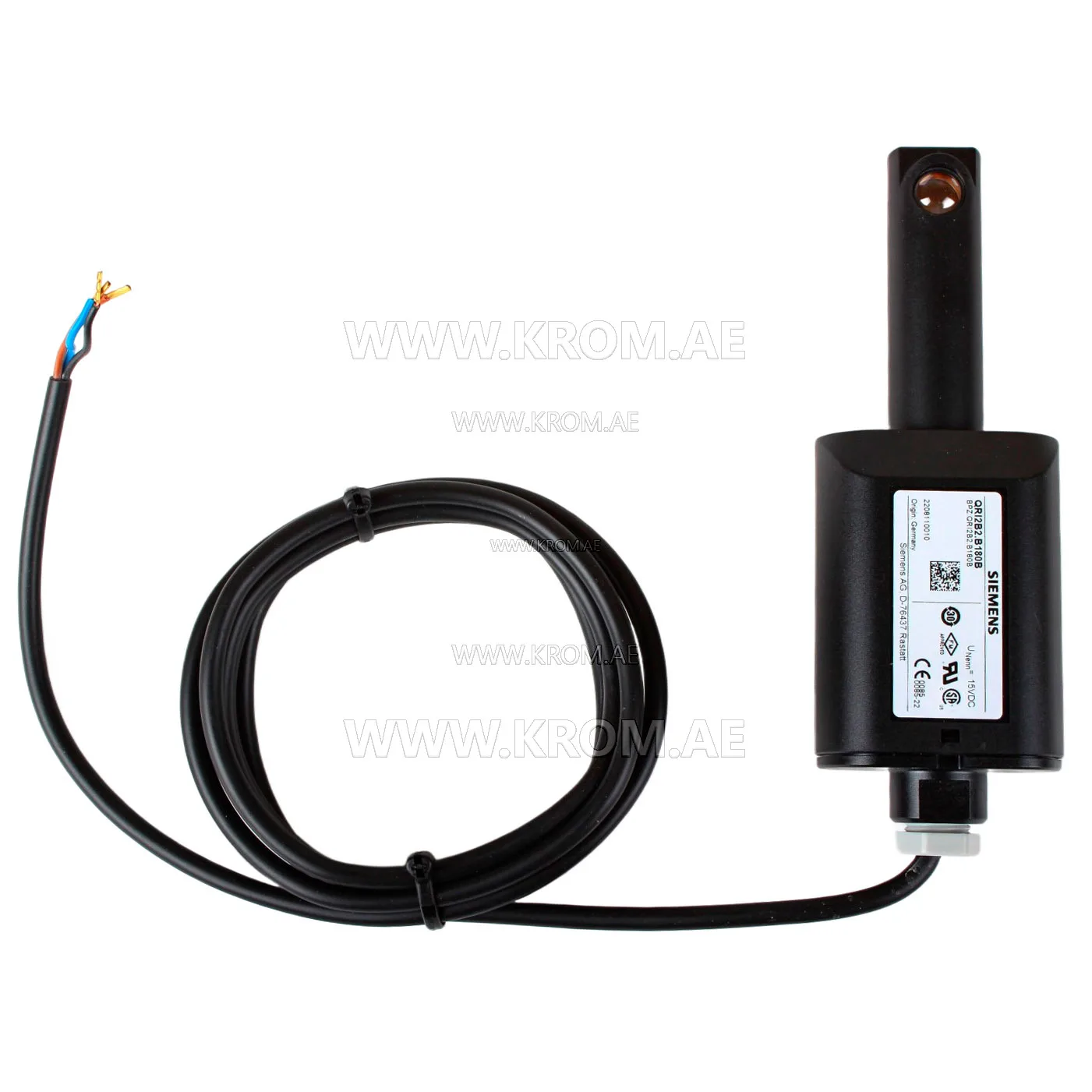
Siemens QRI2B2.B180B flame sensor
Choosing a flame sensor is rarely perceived as something important while the system is running stably. But as soon as failures appear, it becomes clear how critical proper control is. The QRI2B2 B180B flame sensor is not just an automation element, but a key part of safety. That is why the Siemens QRI2B2.B180B flame sensor has long been used in professional systems. At GC Vitaprom in Moscow, clients often come who have already encountered problems and now want not just to buy a new sensor, but to understand what exactly they are choosing. How the sensor works and what it actually controls. A modern sensor monitors that the flame is actually present in the combustion zone, and not just "it seems that everything is in order". The QRI2B2 sensor operates on the principle of detecting infrared radiation emitted by the flame during fuel combustion. That is why it is classified as an infrared sensor. The internal logic is quite simple but effective: the sensor captures the IR signal, responds to the flame light, and analyzes it as an intermittent process. If combustion is unstable or disappears, the controller receives a signal and blocks the supply of gas or liquid fuel. Thanks to this, the system can operate normally in the specified mode, rather than "by chance". Where the Siemens QRI2B2.B180B sensor is used and why it is important. In practice, the Siemens QRI2B2 B180B sensor is most often installed in professional burners where not just the fact of flame presence is important, but correct control at all stages of operation. It is used in systems where different power levels are involved, and the automation must respond clearly and without delays. The model has a side mounting format, so it is important to consider the geometry of the specific burner when installing.