

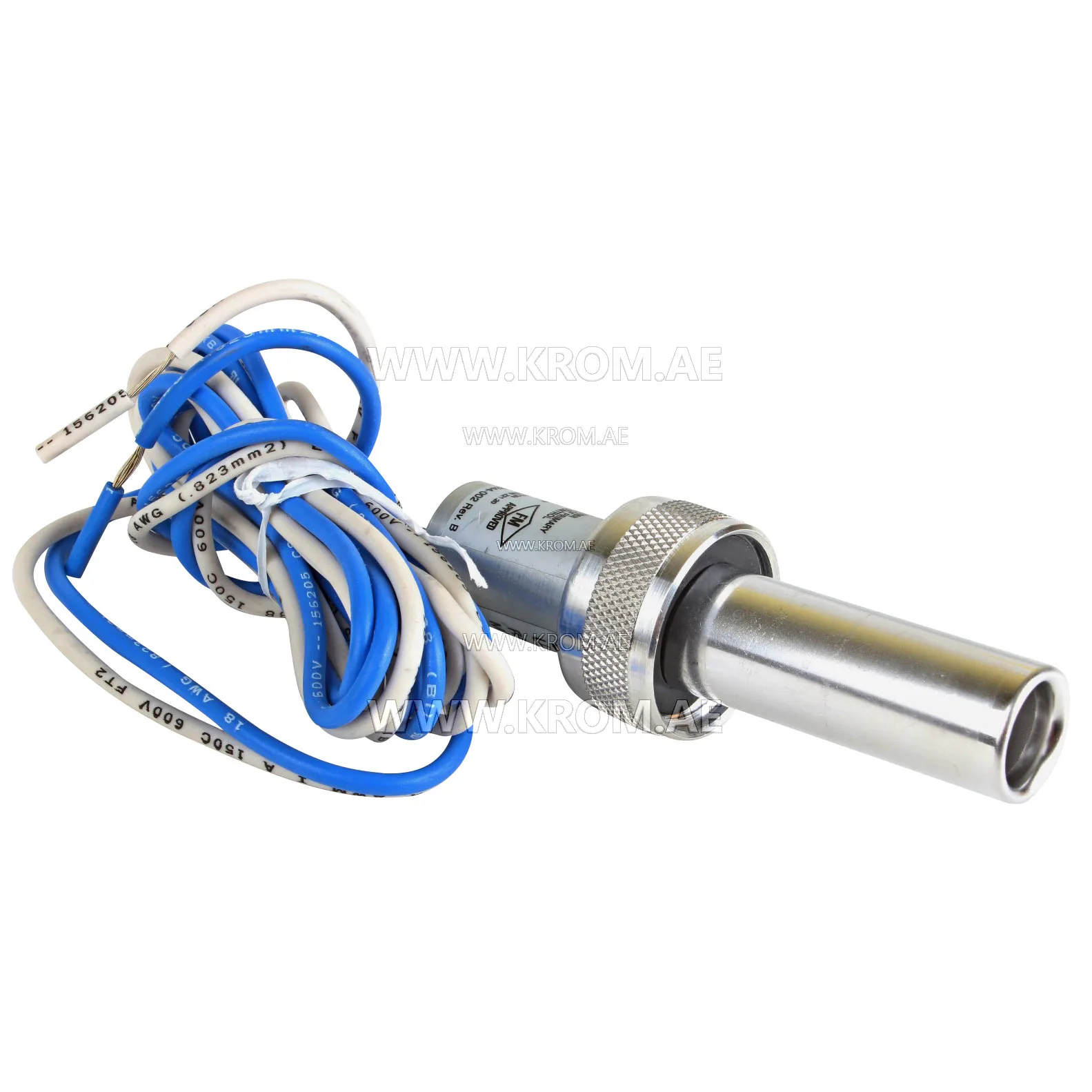
Honeywell C7035A1023 UV sensor
Honeywell C7035A1023/U photoconductive cells are used to determine the presence of ultraviolet radiation emitted by a flame. Flame detectors are used with Honeywell flame monitoring systems to detect the presence of flames in gas, oil and combined burners. Features • The Resideo C7035A1023/B photo cells are used together with the R7249A, R7290A, R7749B and R7849A, B amplifiers and the corresponding Honeywell control devices. • The flame detector C7035A1023 has a built-in cuff with an internal thread of 1-11-1/2 NPSM for installation on a one-inch inspection tube. • The housing of the Honeywell C7035 A 1023 flame detector meets the requirements of Underwriters Laboratories Inc. for protection against moisture penetration and the NEMA standard for cabinets of type 4 and 4X. • When properly installed, the C7035A 1023 can be used at pressures up to 5 psi. • The UV reading tube C7035A 1023/U is replaced in the field. • Two flame detectors C7035 A 1023/B can be connected in parallel in cases where flame reading is difficult. Specifications Flame detection: End of flame. Ambient temperature range: -18°C to +121°C or -40°C to +121°C, depending on the model. Maximum allowable pressure: 5 psi (34.5 kPa). Installation: Cuff with 1-11-1/2 NPSM internal thread for installation on a one-inch inspection tube. (DIN-certified model C7035A1064 has thread 1-11 BSP.P1) Electrical connections: Two wires 6 ft [1.83 m], color-coded, NEC Class 1, rated up to 204°C. One model comes with 12 ft [3.66m] long wires). There is a 1/2-14 NPSM thread at the back of the detector for connecting the wire. Spare parts 1. Flange seal 129808 2. UV reading tube 139464M 18° – + 121°C 3. UV reading tube 139464N 18° – + 121°C Basic requirements for the installation of an ultraviolet flame detector The flame creates ultraviolet radiation that is invisible to the human eye, but can be detected by a special tube reading ultraviolet radiation. There are two requirements that must be met when installing an ultraviolet sensor: • The detector must be in the direct line of sight of the flame. • The detector must not be exposed to other ultraviolet radiation, primarily from ignition sparks. • The detector must necessarily "see" the flame and therefore it must be located as close to the flame as physical conditions and temperature restrictions allow. Certification Underwriters Laboratories Inc.: MP268 certificate. Canadian Standards Association Certificate: Master Report LR 95329-1. Factory Mutual certificate. Certificate of Industrial Risk Insurers.