

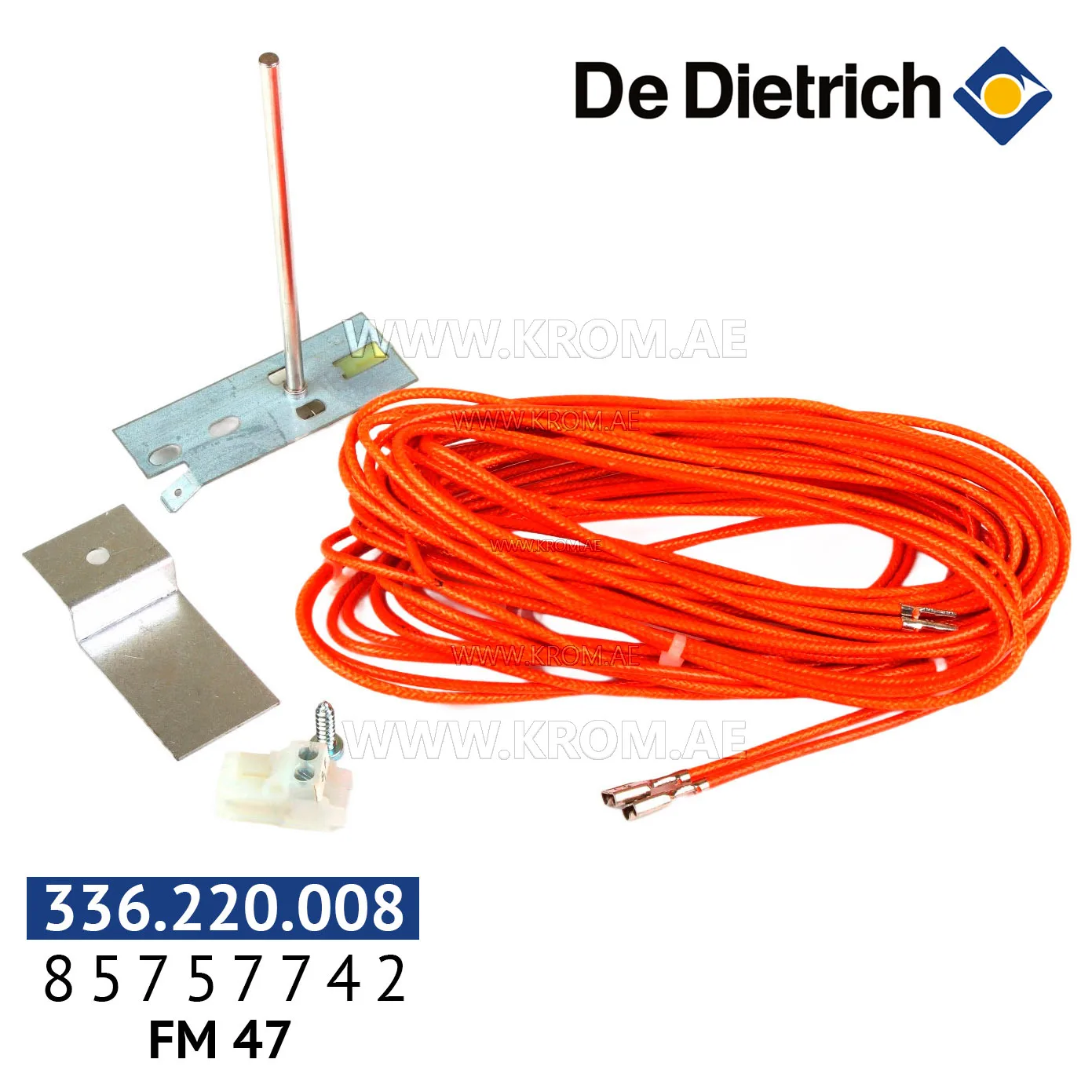
De Dietrich 85757742 sensor de temperatura de los gases de combustión FM 47
The flue gas temperature sensor, listed under the catalogue category of temperature NTC sensors, is a component that monitors the temperature of the exhaust gases leaving the heat exchanger. In condensing boilers, this measurement is used by the control board to optimise combustion efficiency and protect the heat exchanger from overheating. Parts of this type are thermistor-based probes, commonly immersed in a well or clamped directly to the flue pipe. Their resistance value decreases as temperature rises, and the control board interprets the change to regulate fan speed or gas valve position. When replacing a flue gas sensor, the critical selection parameters are the resistance characteristic (typically quoted at 25 °C, e.g. 10 kΩ or 12 kΩ), the probe form (immersion length, thread size if fitted with a sleeve), the cable length, and the type of connector that mates with the boiler’s wiring harness. Because the sensor is exposed to hot, corrosive exhaust, a broken cable or a loose connection inside the plug are common faults. A drifting characteristic will cause the boiler to modulate incorrectly, often leading to cycling or an error code on the display. No further specifics about this article—such as its exact resistance value, probe dimensions, or compatible boiler models—are available from the product data. Confirm that the replacement sensor matches the original probe form (e.g., immersion depth and thread) and that the electrical characteristic is identical to the component being removed. Using a sensor with a different resistance curve will prevent the control board from reading the correct temperature, resulting in erratic operation or lockout.